

Did you know your tires say a lot about the way you drive? Next time you glance at your car’s wheels, what will you discover? By regularly checking your tires’ tread, you can keep a handle on potentially dangerous issues and expensive repairs. Let’s find out what the wear on your tires says about your driving. 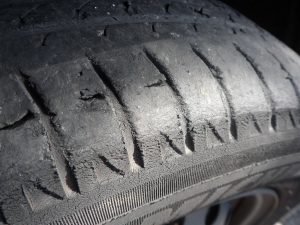
You’re Not Properly Inflating
If you notice that the outside edge of your tires is wearing away faster than the inside, your tires are underinflated. Underinflation causes stress to the sidewalls, making your tires crack and bulge.
On the other hand, overinflated tires will have a center wear pattern. Overinflating changes the shape of the wheel so your car sits only on the center of each tire, causing less tread surface to have contact with the road.
Both situations can be dangerous. To avoid uneven wear in the future, check your tire pressure often. Ensure to inflate them to the number listed in your owner’s manual or on the sticker inside your door frame. By keeping your tires at the proper pressure, they’ll last longer, and you’ll decrease the risk of damage to other essential parts.
You’re Out of Alignment
The goal of a good alignment is to ensure the tires are at an angle that results in the best contact with the road’s surface. The telltale signs of alignment issues vary from damage to the inner or outer edge of the tire or a feathered look where the tread is worn down on only one side of the tire. If you notice damage like this, you either have a car with a bad tire adjustment, or it’s improperly aligned front-to-back or side-to-side.
If your car is out of alignment, you’ll need to hire a certified mechanic. This expert will adjust your car’s steering and suspension components back to its factory specifications.
Rotate Your Tires
Feathering on your tires does not always indicate bad alignment. If you see a heel-to-toe feathering pattern, where the leading edge is low and the trailing edge is high, it’s a sign that you need to rotate your tires. Most tire manufacturers recommend rotating your tires regularly to ensure even tread wear. This practice may also extend the life of your tires.
Aggressive Driving
Are you an aggressive driver? If you’re doing everything else right but your tires continue to wear out quickly, it’s time to take a look at your habits behind the wheel. Hard braking, for example, causes flat spots. Do your best to ease to a stop, preventing this type of damage. If you are, you might be causing undue wear to your tires. Stomping on both the gas and the brakes and high-speed cornering put a ton of stress on your tires’ surfaces.
Having quality tires with good, working tread is essential to your safety on the road. They’re necessary for stopping quickly, and they provide the traction you need in adverse conditions. Before you climb in the driver’s seat, it’s worth taking a minute or two to see what the wear on your tires says about your driving.
Image via Flickr by Karen V Bryan used under CC By
Connect with us


Recent Blog Entries
- Why the Ford Bronco Sport Is the Perfect Everyday Adventure SUV for Modern Drivers
- Summer Heat & Your Vehicle: Why Hot Weather Causes More Breakdowns Than You Think
- AI vs Reality: Can You Trust Online Answers for Ford Warning Lights?
- The Ford Escape Is Ending Production: Why the 2027 Ford Bronco Sport is the Next Step for SUV Shoppers
- The Least Expensive New Cars to Maintain in 2026